Can a Herniated Disc Heal on Its Own?
Discover the natural healing process of herniated discs, resorption rates, and when intervention is needed.
Key Takeaways
- 60-90% of herniated discs improve without surgery within 6-12 weeks
- Disc resorption is a real biological process absorbing herniated material
- Larger herniations paradoxically have the best natural healing rates
- Cauda equina syndrome requires urgent surgical evaluation
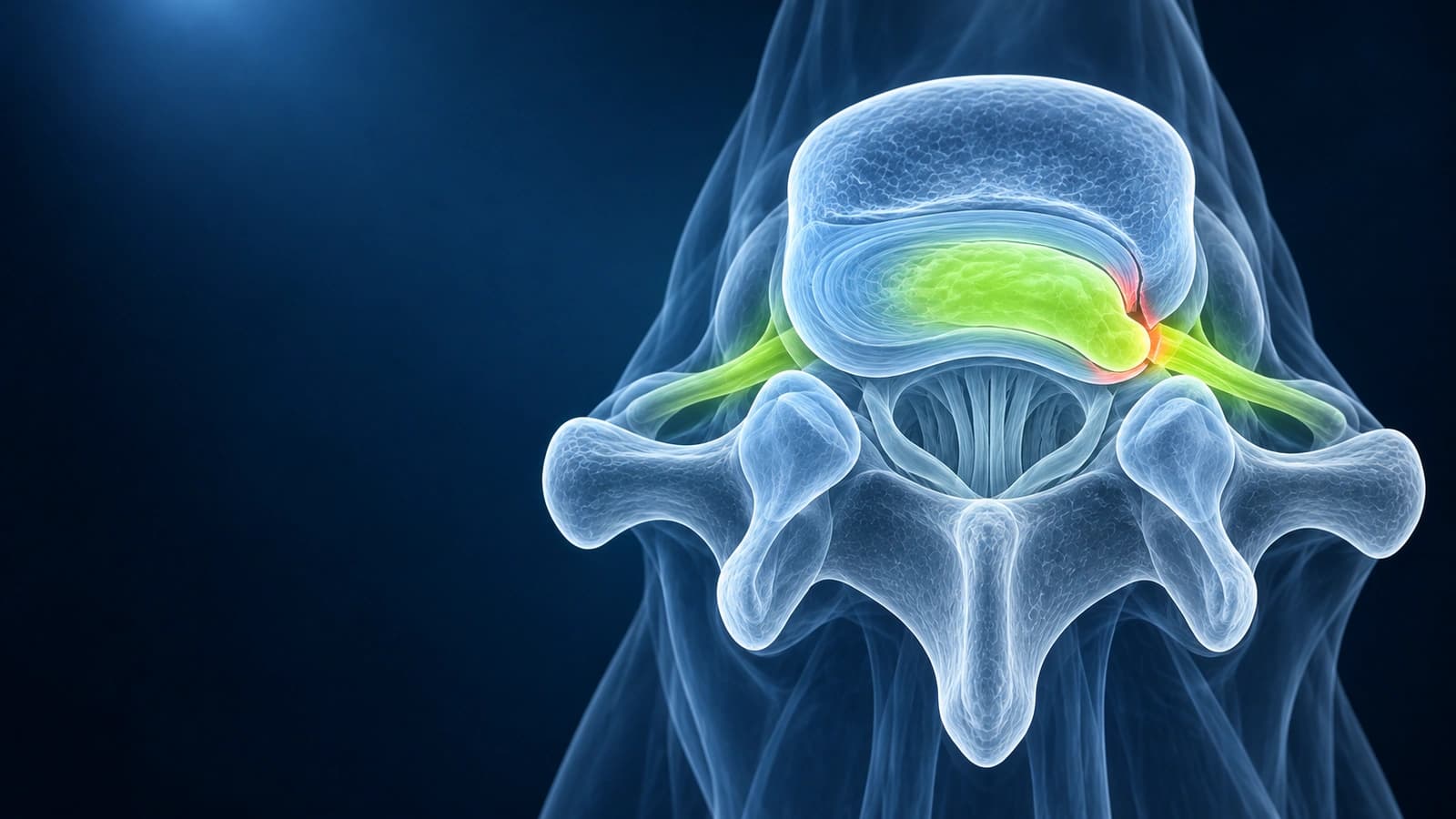
A herniated disc occurs when the soft gel-like center (nucleus pulposus) of a spinal disc pushes through a tear in the outer ring (annulus fibrosus), potentially compressing nearby nerves. The good news is that 60-90% of herniated discs improve significantly without surgery within 6-12 weeks through natural healing processes and conservative treatment.
The Science of Disc Resorption
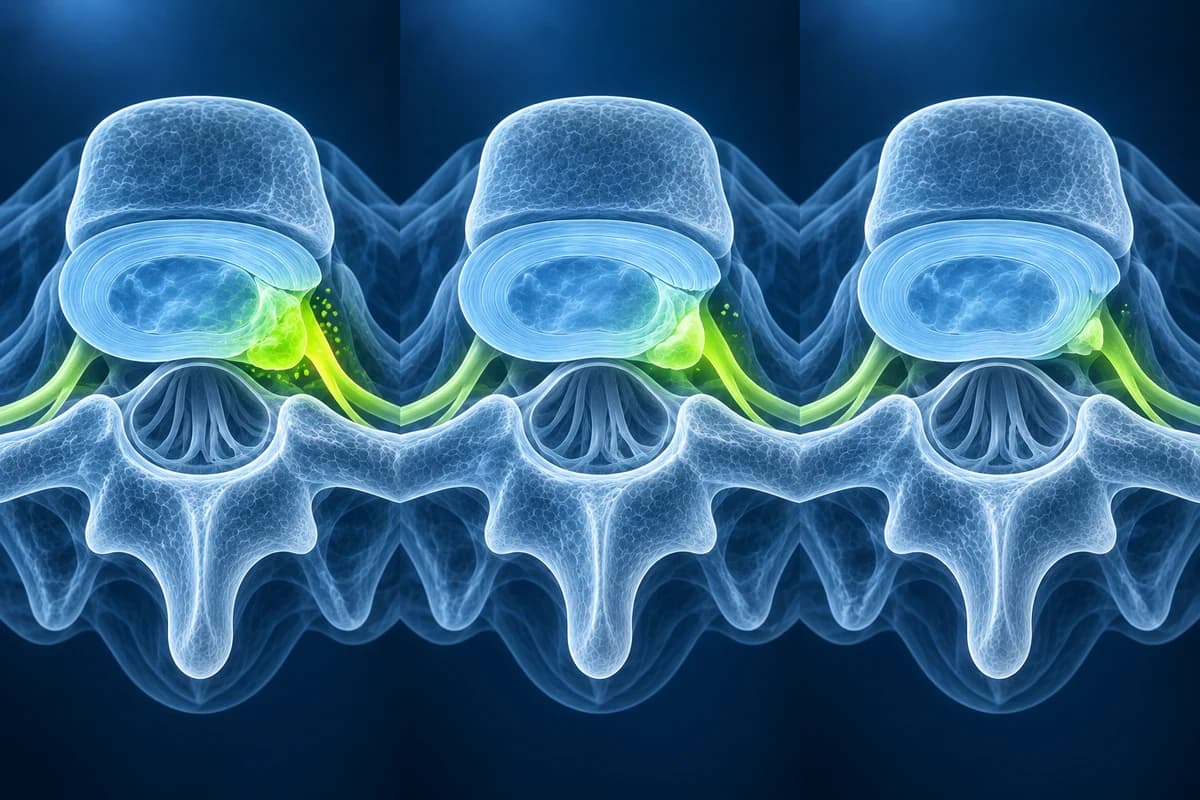
A systematic review found regression in 96% of sequestered herniations and 70% of extrusions. Regression does not always mean complete disappearance. See our guide to reading spine MRI.
Natural Healing Timeline
- Weeks 1-2: Acute phase with significant pain and inflammation
- Weeks 2-6: Gradual improvement as inflammation subsides
- Weeks 6-12: Substantial improvement in most patients as resorption progresses
- Months 3-6: Continued remodeling and symptom resolution
- Months 6-12: Final recovery phase with residual improvements
Conservative Treatment Approaches
Effective management combines NSAIDs, physical therapy with McKenzie-based exercises, core stabilization, and nerve mobilization. Epidural steroid injections provide temporary relief for severe radicular pain. For exercises, see our guide on spine exercises for herniated disc recovery.
When Surgery Becomes Necessary
Cauda equina syndrome (saddle numbness, bladder or bowel dysfunction, bilateral leg weakness) is a surgical emergency. Progressive neurological deficit and intractable pain failing 6-12 weeks of conservative treatment are also indications. Microdiscectomy has an 85-95% success rate for nerve compression pain relief.
Factors Influencing Natural Healing
Herniation type matters most: sequestered and extruded have the best resorption rates. Smoking impairs disc healing by reducing blood flow. Obesity increases spinal loading. Psychological factors including catastrophizing and fear-avoidance are strong predictors of poor outcomes. See our CT vs MRI comparison for evaluating disc herniations with different modalities.
Frequently Asked Questions
How do I know if my herniated disc is healing?
The most reliable sign is centralization of pain: leg or arm pain gradually retreats toward the spine. Improvement in numbness, tingling, and strength also signal healing. Follow-up MRI can confirm disc resorption if needed.
Can a herniated disc come back after it heals?
Yes, approximately 5-15% of patients experience recurrence at the same level. Maintaining core strength, proper lifting mechanics, and healthy body weight reduces recurrence risk.
Is bed rest recommended for a herniated disc?
Extended bed rest is no longer recommended. While 1-2 days of rest may be necessary for severe pain, early return to modified activity is associated with faster recovery. Walking and gentle stretching are encouraged.
Sources
- Chiu CC, Chuang TY, Chang KH, et al. The probability of spontaneous regression of lumbar herniated disc: a systematic review. Clin Rehabil. 2015;29(2):184-195.
- Autio RA, Karppinen J, Niinimäki J, et al. Determinants of spontaneous resorption of intervertebral disc herniations. Spine (Phila Pa 1976). 2006;31(11):1247-1252.
- Peul WC, van Houwelingen HC, van den Hout WB, et al. Surgery versus prolonged conservative treatment for sciatica. N Engl J Med. 2007;356(22):2245-2256.
- Vroomen PC, de Krom MC, Wilmink JT, et al. Lack of effectiveness of bed rest for sciatica. N Engl J Med. 1999;340(6):418-423.
Related Articles
Safe and effective exercises for herniated disc recovery, including McKenzie method, core stabilization, and movements to avoid.
Decode your spine MRI report, understand disc levels, signal changes, and common findings explained in plain language.
Disc bulge vs protrusion vs extrusion vs sequestration, facet syndrome, vertebral fractures and stenosis — anatomy, MRI findings, and treatment options.
Related Conditions
Understand your imaging before your next appointment
MRI, X-ray or CT from a CD, folder or ZIP. A PDF report or photos of the films work too.
Free to open and preview, no account needed. An optional AI report from $10 explains your images in plain language, with questions for your doctor.
Your raw files stay on this device. Only rendered images and minimal context are sent when you request an AI report.
Medical Disclaimer: This page is for informational and educational purposes only. It does not constitute medical advice, diagnosis, or treatment. AI-generated analysis may contain errors. Always consult a qualified healthcare professional for medical decisions. Full Disclaimer