
Spine Exercises for Herniated Disc Recovery
Safe and effective exercises for herniated disc recovery, including McKenzie method, core stabilization, and movements to avoid.
Key Takeaways
- The McKenzie method (prone press-ups) is the first-line exercise for most lumbar disc herniations
- Core stabilization protects the spine — focus on bracing, dead bugs, bird dogs, and planks
- Avoid sit-ups, crunches, and flexion-based exercises during recovery
- Walking is one of the most effective and accessible exercises for disc herniation
- Symptom centralization (leg pain retreating toward the spine) is a positive sign during exercise
- Progressive strengthening including squats and deadlifts can be safely reintroduced with proper form
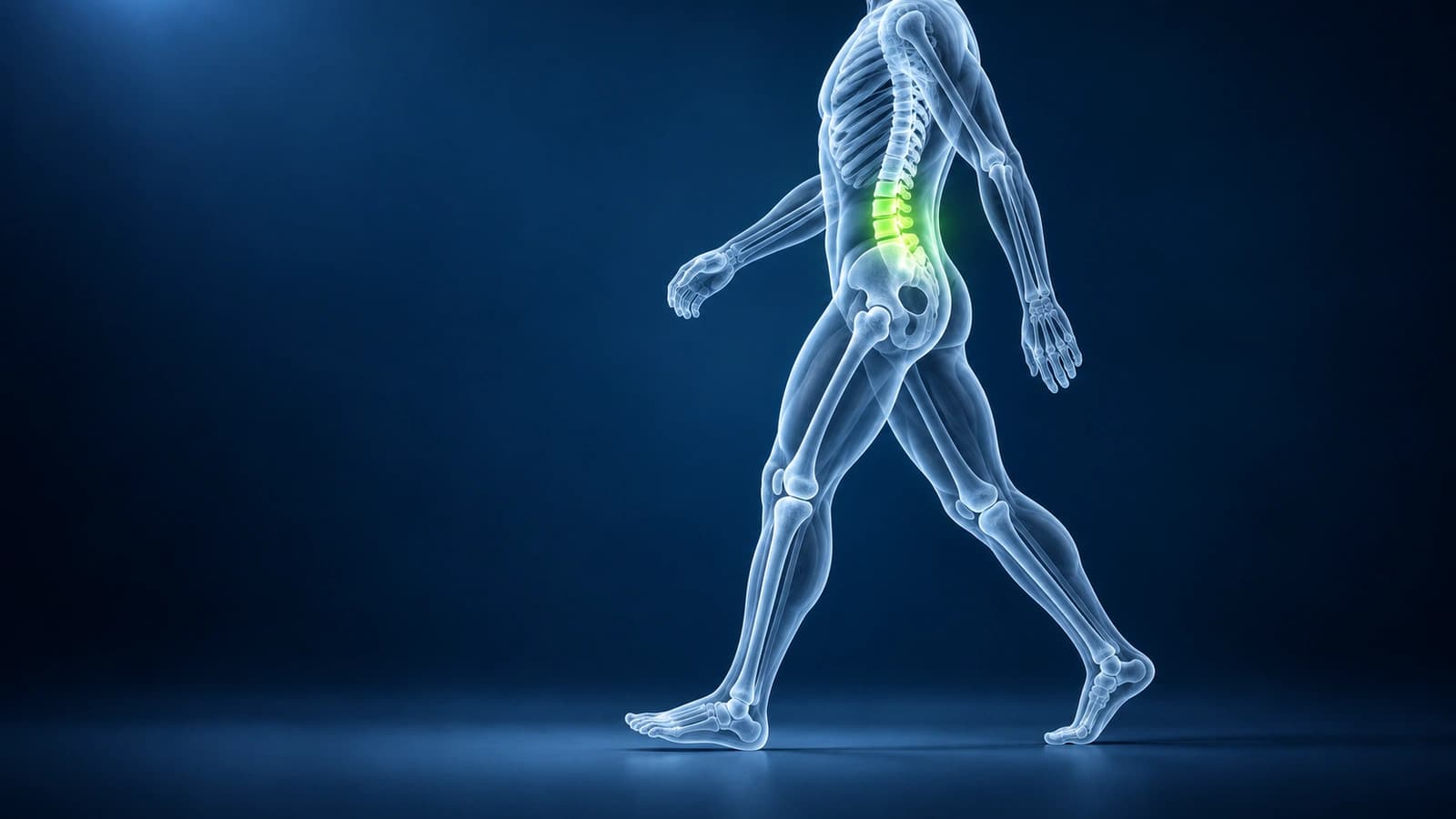
Exercise is one of the most effective treatments for a herniated disc, but knowing which exercises to do — and which to avoid — makes all the difference. The right exercises can promote disc healing, reduce nerve compression, strengthen the muscles that support your spine, and prevent recurrence.
This guide covers evidence-based exercise approaches including the McKenzie method, core stabilization, stretching, and functional strengthening, with clear guidance on what to do at each stage of recovery. For more on how herniated discs heal naturally, see our article on herniated disc natural healing.
The McKenzie Method (Mechanical Diagnosis and Therapy)
The McKenzie method is one of the most studied and widely used approaches for disc herniation management. It is based on the concept of directional preference — the idea that moving the spine in a specific direction can cause symptoms to centralize (retreat from the leg back toward the spine), which indicates healing. For most lumbar disc herniations, the directional preference is extension (backward bending).
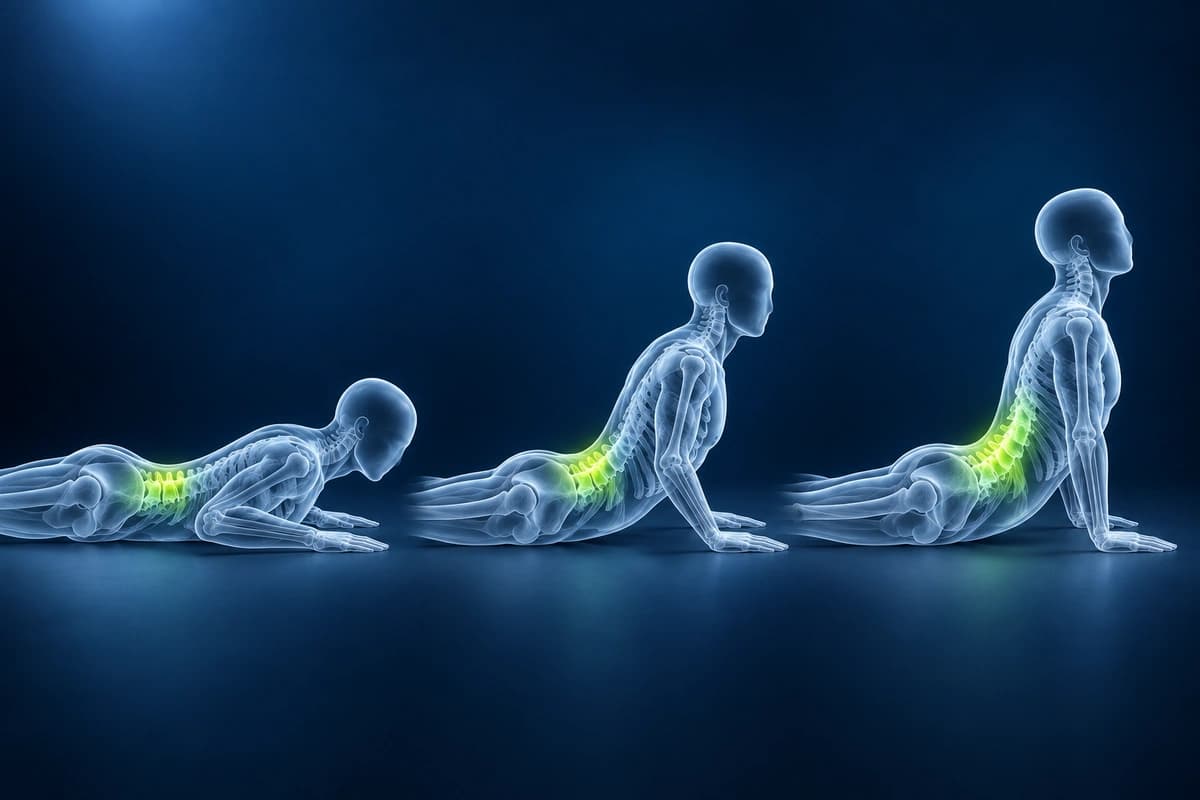
The basic exercise is the prone press-up: lie face down on your stomach, place your hands under your shoulders (as if doing a push-up), and slowly push your upper body up while keeping your hips on the floor. Hold for 1-2 seconds and repeat 10-15 times every 2-3 hours. If your leg pain centralizes (moves closer to the spine) or decreases during this exercise, extension is your directional preference. If symptoms worsen or peripheralize (move further down the leg), stop and consult a McKenzie-trained physiotherapist.
Core Stabilization Exercises
A strong core — including the deep stabilizers (transversus abdominis, multifidus), the abdominals, obliques, and spinal erectors — protects the spine from excessive loading. Core stabilization should begin early in recovery with gentle activation exercises and progress to more challenging movements as symptoms improve.
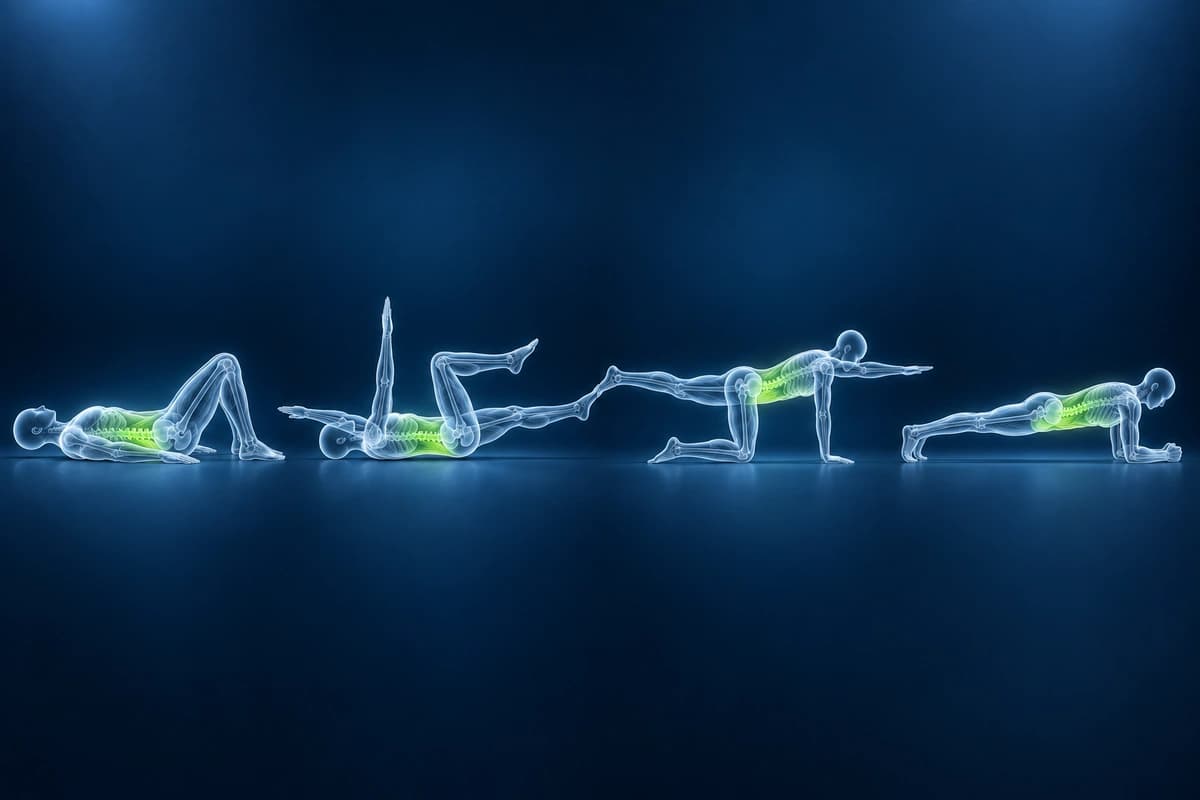
- Abdominal bracing: lie on your back with knees bent and gently contract your abdominal muscles as if bracing for a punch, hold for 10 seconds, repeat 10 times
- Dead bugs: lying on back, extending opposite arm and leg while maintaining a braced core
- Bird dogs: on hands and knees, extending opposite arm and leg with controlled movement
- Modified planks: forearm planks, starting with shorter holds and progressing duration
Avoid sit-ups, crunches, and Russian twists — these flexion-based exercises increase disc pressure and can worsen herniation symptoms. For cervical herniations, deep neck flexor training (chin tucks) is the equivalent of core stabilization for the lumbar spine.
Stretching and Mobility
Muscle tightness in the hips, hamstrings, and hip flexors contributes to abnormal spinal loading and can perpetuate disc herniation symptoms. Key stretches include hamstring stretching (use a towel or strap while lying on your back to avoid spinal flexion), piriformis stretch (figure-four position lying on your back), hip flexor stretch (half-kneeling lunge position), and cat-cow mobilization (gentle spinal flexion and extension on hands and knees within pain-free range).
Nerve mobilization exercises, often called nerve flossing, can help reduce neural tension and improve symptoms. The sciatic nerve glide is performed by sitting on a chair, straightening the affected leg while looking up, then bending the knee while looking down — creating a gentle sliding motion of the nerve through surrounding tissues. Perform 10-15 repetitions 2-3 times daily. All stretches should be gentle and pain-free.
Walking and Progressive Strengthening
Walking is one of the best exercises for a herniated disc — it promotes blood flow, gently mobilizes the spine, and improves mood. Start with 10-15 minute walks and gradually increase to 30-45 minutes. Swimming reduces spinal loading by up to 50% and is an excellent alternative. Once acute symptoms resolve (typically after 4-8 weeks), progress to functional strengthening: bridges, hip thrusts, lat pulldowns, rows, and eventually squats and deadlifts with careful attention to neutral spine positioning.
Frequently Asked Questions
How soon can I exercise after a herniated disc diagnosis?
You can begin gentle exercises immediately. Walking, prone press-ups (if tolerated), and isometric core bracing can start within the first few days. The key is to stay active within your pain tolerance rather than resting in bed. Formal physical therapy typically begins within the first 1-2 weeks. More vigorous strengthening usually begins at 4-8 weeks as acute symptoms subside.
When can I return to running after a herniated disc?
Running can typically be resumed when you can walk 30-45 minutes without pain, have good core stability, and minimal leg symptoms. This usually takes 6-12 weeks. Start with a walk-run program and gradually increase the running proportion.
Is swimming safe with a herniated disc?
Swimming is one of the best exercises for a herniated disc because water buoyancy reduces spinal loading. Backstroke and freestyle are generally well-tolerated. Breaststroke should be approached with caution as the leg kick involves hip and spinal flexion. Butterfly stroke should be avoided initially. Water walking and aqua jogging are excellent low-impact alternatives.
Do I need to do exercises forever after a herniated disc?
Transitioning to a general fitness program with core strengthening and cardiovascular exercise is strongly recommended. A maintenance routine of 20-30 minutes, 3-4 times per week, provides lasting protection for your spine.
Sources
- Long A, Donelson R, Fung T. Does it matter which exercise? A randomized control trial of exercise for low back pain. Spine (Phila Pa 1976). 2004;29(23):2593-2602.
- Wilke HJ, Neef P, Caimi M, et al. New in vivo measurements of pressures in the intervertebral disc in daily life. Spine (Phila Pa 1976). 1999;24(8):755-762.
- Basson A, Olivier B, Ellis R, et al. The effectiveness of neural mobilization for neuromusculoskeletal conditions: a systematic review and meta-analysis. J Orthop Sports Phys Ther. 2017;47(9):593-615.
- Vroomen PC, de Krom MC, Wilmink JT, et al. Lack of effectiveness of bed rest for sciatica. N Engl J Med. 1999;340(6):418-423.
Related Articles
Discover the natural healing process of herniated discs, resorption rates, and when intervention is needed.
Decode your spine MRI report, understand disc levels, signal changes, and common findings explained in plain language.
Related Conditions
Understand your imaging before your next appointment
MRI, X-ray or CT from a CD, folder or ZIP. A PDF report or photos of the films work too.
Free to open and preview, no account needed. An optional AI report from $10 explains your images in plain language, with questions for your doctor.
Your raw files stay on this device. Only rendered images and minimal context are sent when you request an AI report.
Medical Disclaimer: This page is for informational and educational purposes only. It does not constitute medical advice, diagnosis, or treatment. AI-generated analysis may contain errors. Always consult a qualified healthcare professional for medical decisions. Full Disclaimer