
Do You Need a 3T MRI for Back or Neck Pain?
Learn when 3T spine MRI can help for subtle nerve, cord, inflammatory, or post-surgical questions, and when routine 1.5T spine MRI is usually enough.
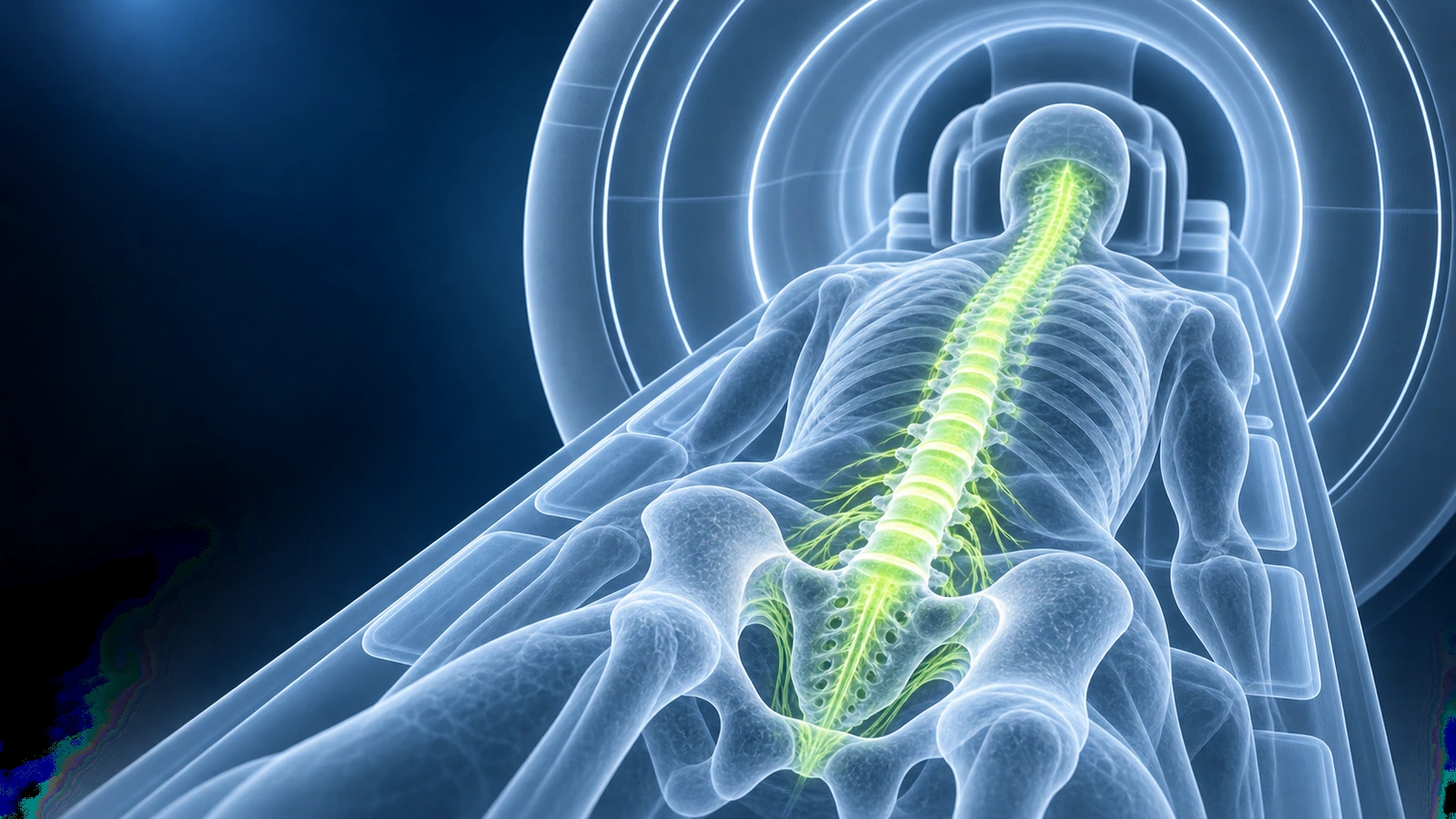
A 3T spine MRI can help when the unanswered question is subtle: small nerve-root detail, spinal cord signal, early inflammatory change, infection, tumor spread, or post-surgical scar versus recurrent disc. It is not automatically better for every back pain, neck pain, or sciatica workup.
Spine imaging also has a trap: stronger magnets can make metal artifact, motion sensitivity, and field inhomogeneity more noticeable. The best scan is the one that answers the clinical question, not simply the strongest scanner on the brochure.
Quick Answer: When 3T Spine MRI Is Worth Asking About
Ask about 3T when a clinician needs fine nerve, cord, marrow, inflammatory, infection, tumor, or post-operative detail. Do not pay extra for 3T just to repeat a recent clear lumbar MRI for routine disc bulge, stenosis, or degenerative back pain without a new question.
Check Your Existing Spine ScanWhen 3T Can Add Value for Spine MRI
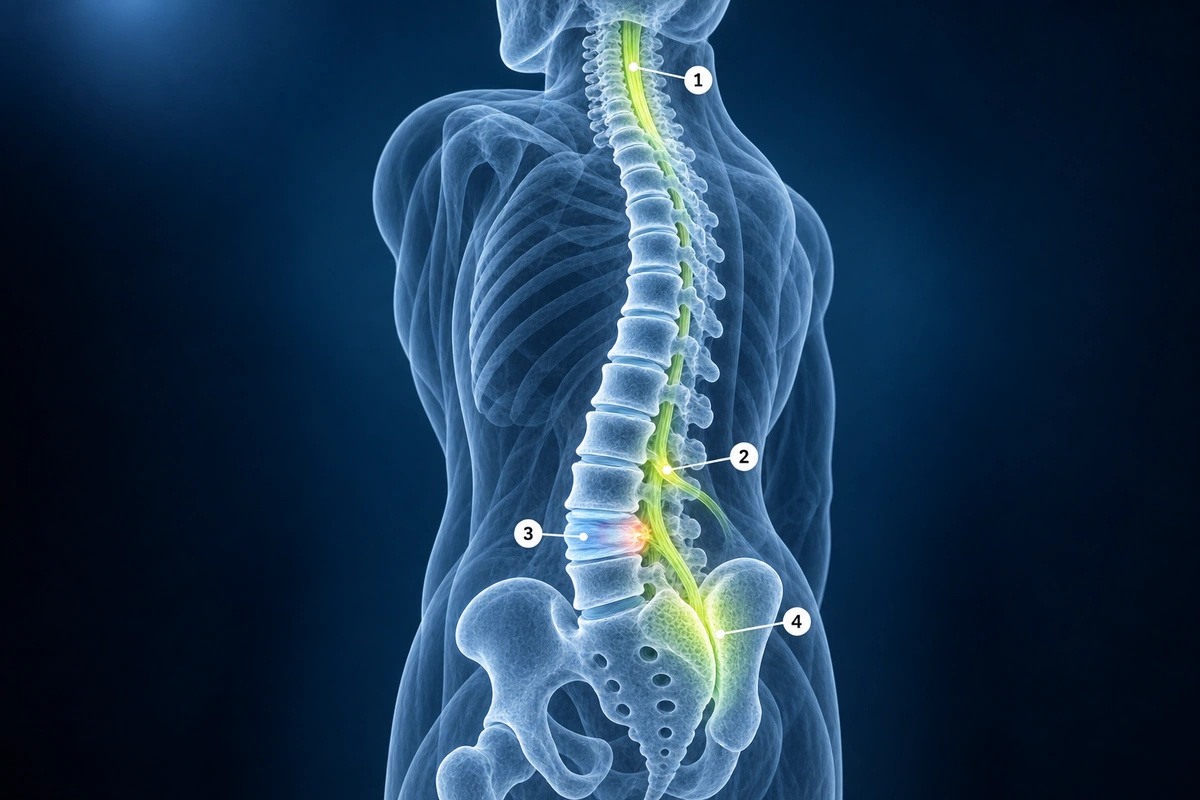
- Subtle cervical cord signal, demyelination, myelopathy, or syrinx questions
- Small foraminal or lateral recess nerve-root compression when symptoms are precise
- Post-surgical scar versus recurrent disc questions with the right contrast protocol
- Early infection, inflammatory sacroiliitis, marrow edema, or tumor staging questions
- Complex cases where thin slices and high signal can change the next specialist decision
When You Probably Do Not Need 3T
- Routine low back pain without red flags, where imaging may not be needed at all
- A straightforward lumbar disc herniation already visible on a recent 1.5T MRI
- Known arthritis or degenerative stenosis where symptoms and exam drive treatment
- Spine hardware cases where CT or metal-artifact-reduction MRI may be more important than 3T
- Repeating a scan without a new symptom, new neurologic finding, or treatment decision
3T vs CT for Spine Questions
MRI is strong for discs, nerves, cord, marrow, and soft tissue. CT can be better for fine bone detail, fracture lines, fusion hardware, and surgical planning. Before paying for a stronger MRI, compare the decision with our spine CT vs MRI guide.
Already Have a Spine MRI, CT, or X-ray?
Upload your existing spine imaging for a private AI explanation before paying for another scan. Raw files stay in your browser; optional AI uses rendered images and provides educational context, not a diagnosis.
Upload Spine ImagingKey Takeaways
- 3T spine MRI is most useful for subtle nerve, cord, marrow, infection, tumor, or post-operative questions
- Routine lumbar disc and stenosis cases often do not need a premium 3T repeat scan
- Hardware artifact can make scanner choice and protocol more important than magnet strength
- CT may be the better test when the decision depends on bone or hardware detail
Frequently Asked Questions
Is 3T MRI necessary for a lumbar disc herniation?
Usually not. A well-performed 1.5T lumbar MRI often shows disc herniation, nerve compression, and stenosis clearly. 3T is more useful when the first scan leaves a specific subtle question unanswered.
Can 3T spine MRI be worse with hardware?
It can be less helpful if metal artifact obscures the area of interest. In hardware cases, protocol, metal-artifact-reduction sequences, CT, and the exact question often matter more than choosing 3T.
Should I repeat a 1.5T spine MRI on a 3T scanner?
Repeat only when symptoms changed, the prior scan was technically limited, or a specialist needs a more targeted answer. Repeating a clear scan just because 3T sounds better can waste money.
Related Articles
Decode your spine MRI report, understand disc levels, signal changes, and common findings explained in plain language.
Compare CT and MRI scans, their strengths for different conditions, radiation exposure, cost, and when each is the better choice.
Pfirrmann grading of lumbar disc degeneration on MRI — Grade I (healthy) through V (severe collapse), what each grade means for symptoms and treatment.
Related Conditions
Ready to analyze your imaging? Upload your MRI or X-ray for AI-powered analysis
Upload your MRI or X-ray DICOM files for private, AI-powered analysis. 4 models analyze independently — raw scan files stay in your browser.
Start AnalysisMedical Disclaimer: This page is for informational and educational purposes only. It does not constitute medical advice, diagnosis, or treatment. AI-generated analysis may contain errors. Always consult a qualified healthcare professional for medical decisions. Full Disclaimer